Function : Treats acute liver failure or chronic liver failure
Common Names : NA
Pain Intensity : Painful
Procedure Duration : 4-8 hours
Hospital Days : 20 - 21 Days
Anesthesia Type : General
Eligibilty: Lorem Ipsum is simply dummy text of the printing and typesetting industry. Lorem Ipsum has been the industry's standard dummy text ever since the 1500s, when an unknown printer took a galley of type and scrambled it to make a type specimen book.
Career: Lorem Ipsum is simply dummy text of the printing and typesetting industry. Lorem Ipsum has been the industry's standard dummy text ever since the 1500s, when an unknown printer took a galley of type and scrambled it to make a type specimen book.
Entrance Provision: Lorem Ipsum is simply dummy text of the printing and typesetting industry. Lorem Ipsum has been the industry's standard dummy text ever since the 1500s, when an unknown printer took a galley of type and scrambled it to make a type specimen book.
Get Cost of Plastic surgery
Over View
Your spine is a bone structure that supports your body and connects to different parts of your musculoskeletal system.
What is the spine?
The spine, or backbone, is a bony structure that supports your body. It connects different parts of your musculoskeletal system, which includes your body’s bones and muscles. Your spine helps you sit, stand, walk, twist and bend.
Function
What does the spine do?
Your spine has several important functions, including:
Giving your body structure (shape).
Supporting your body (posture).
Protecting your spinal cord (nerves that connect your brain to the rest of your body).
Allowing you to be flexible and move.
Anatomy
Where is the spine located?
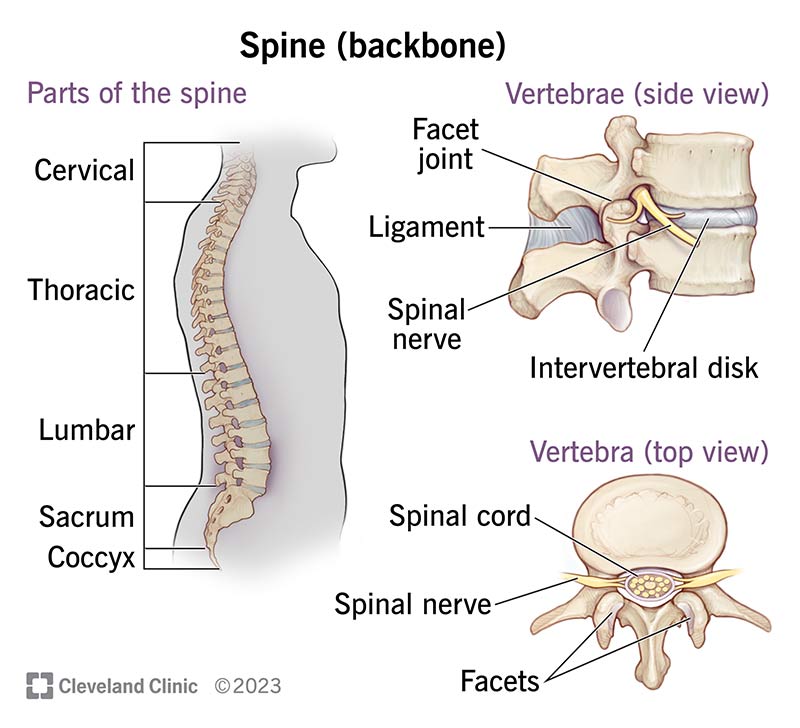
Your spine is the long column of bones that extend from your neck to your lower back. Your spine starts at the base of your skull (head bone) and ends at your tailbone, a part of your pelvis (the large bony structure between your abdomen and legs).
What does the spine look like?
A healthy spine has three natural curves that make an S-shape. These curves work as shock absorbers to protect your spine from injury.
Several bones and soft tissues make up your spine. They connect like bricks, stacked one on top of the other and help support your body in different ways.
Minimally invasive spine surgery techniques use smaller incisions and specialized tools to access the spine, resulting in less tissue damage and quicker recovery times.